
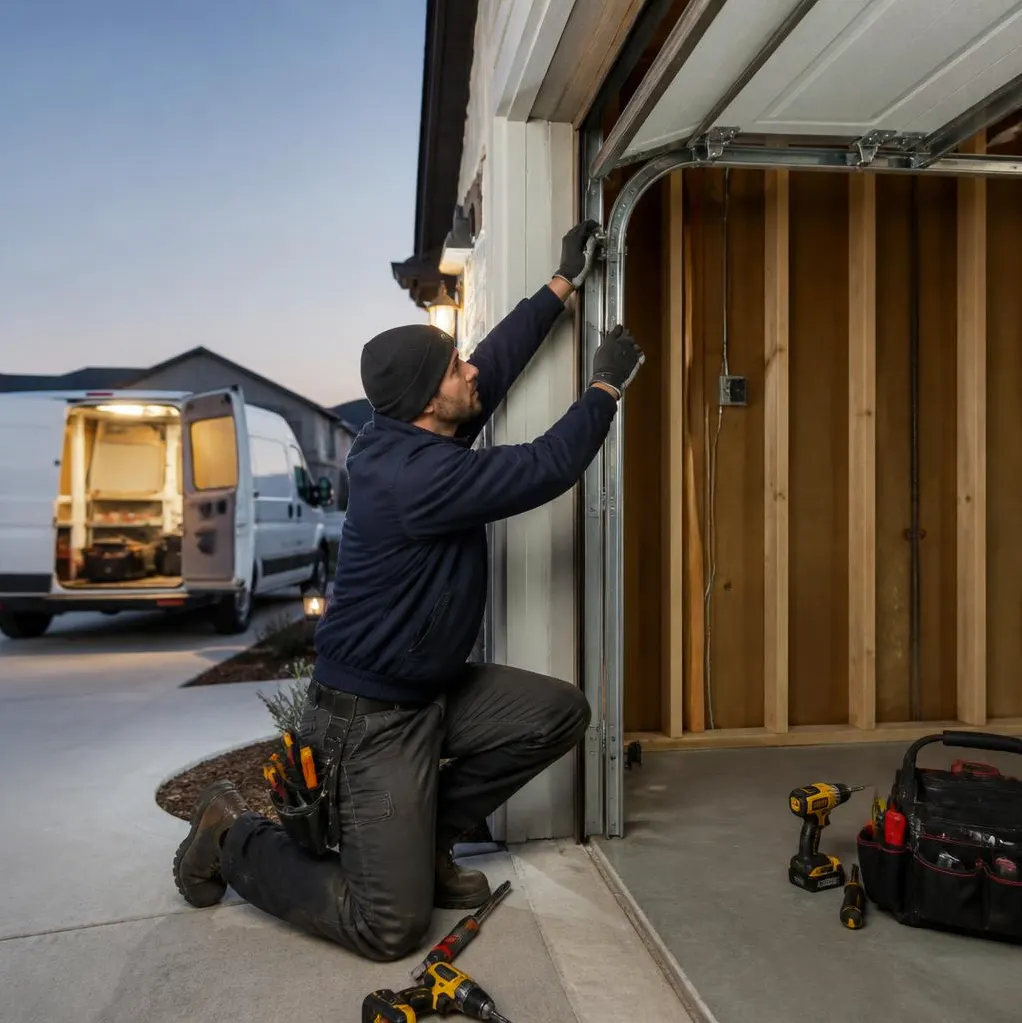
You pull into the driveway after an afternoon downpour, hit the remote, and watch the door climb — except one panel near the bottom doesn't look right. There's a crease where a shopping cart or a blown-over trash can caught it, or maybe last hurricane season's debris left a crack that's been letting water seep in ever since. The door still opens and closes, mostly, but now you're standing in the garage wondering if you need to replace that one section or start thinking about the whole door.
What a Single-Panel Replacement Involves
Garage doors are built in horizontal sections, and most manufacturers keep panel stock for a number of years after a model is sold. A technician removes the damaged section, disconnects it from the track rollers and hinges, and bolts in a matching replacement. If the color and panel style are still in production, the job can often be done in a single visit.
The catch is matching. Paint fades with sun exposure, and a door that's a few years old — especially one that's seen a lot of salt air near the coast — may have a visibly different shade or texture between the new panel and the rest of the door. Older or discontinued models sometimes can't be matched at all, which forces a decision you didn't want to make on a budget timeline.
What a Full Door Replacement Involves
A full replacement means pulling the entire door, track, and sometimes the opener mounting hardware, and installing a new system top to bottom. It's a bigger job — typically most of a day — but it gives you a uniform appearance, current hardware, and the chance to upgrade to a door rated for higher wind loads, which matters more here than in most parts of the country.
Side-by-Side: The Real Trade-offs
- Cost: Panel repair is usually a fraction of a full replacement — national ranges for a single panel swap often run a few hundred dollars, while a full door replacement typically falls in the low-to-mid thousands depending on material and size.
- Time: Panel work can often be finished same-day if stock is available. Full replacement usually takes longer to schedule and install, especially for custom sizes or insulated doors.
- Appearance: Panel repair risks a visible mismatch, especially on sun-faded or older doors. Full replacement guarantees uniform color and finish.
- Structural integrity: A damaged panel often means the surrounding track, hinges, and rollers took stress too. Panel repair fixes the visible issue but may not address hidden wear. Full replacement resets everything.
- Wind resistance: If your current door predates updated wind-load standards, a single patched panel still leaves the rest of the door at the old rating. A full replacement lets you bring the whole door up to current wind-rated hardware, which matters heading into hurricane season.
- Long-term value: If the door is already older — track showing rust, springs original to the house, opener aging out — a panel repair is a short-term fix on a system that may need full replacement soon anyway.
When Panel Replacement Makes the Most Sense
If the rest of the door is in good shape — balanced, moving smoothly, no rust creeping along the bottom panels, springs and cables showing no wear — and the damage is isolated to one section from a one-time impact, a panel swap is usually the right call. This is especially true for newer doors still in production, where color matching is straightforward. It's also the better choice if budget timing matters more than cosmetic perfection; a slightly mismatched panel that functions correctly beats an unplanned full replacement.
When a Full Replacement Is the Better Investment
If the door is older, already shows the kind of rust or swelling that comes from years of humidity and moisture exposure, or if the damaged panel is just the most visible symptom of a door that's been struggling — hard to lift, noisy, opener straining — a full replacement often costs less over time than a string of individual repairs. It's also worth considering if you've been wanting a wind-rated upgrade anyway, since insurance and storm readiness both factor into the value of a newer door. Homes closer to the coast, where salt air accelerates corrosion on hardware and tracks, tend to see this situation sooner than homes further inland.
What's Typical for Homes in This Area
Most garage doors here deal with a combination of humid air, hard afternoon rain, and occasional storm debris — conditions that stress hardware faster than a single dent ever will. A homeowner with a five-year-old door and one cracked panel from a recent storm is usually a good candidate for a straightforward panel replacement. A homeowner with a door that's been swelling at the seams, showing rust along the bottom track, and now has a cracked panel on top of all that is usually looking at a full replacement being the more sensible long-term move, even if the upfront cost is harder to swallow.
When to Call El Jobean Garage Door Experts
If you're staring at a damaged panel and aren't sure which way to go, that's exactly the kind of call worth making before you buy anything. A technician can check whether the panel style is still available, inspect the track and springs for hidden wear from the same impact, and give you a straight answer on whether Garage Door Cable Repair or hardware adjustments are needed alongside the panel itself. If the door's age or condition points toward a bigger issue, we'll walk you through Garage Door Installation & Replacement options built for wind-load conditions in this area, rather than just patching over a problem that's going to resurface.
If you're dealing with a dented, cracked, or water-damaged panel anywhere in El Jobean, Port Charlotte, Englewood, or the surrounding Charlotte County area, call El Jobean Garage Door Experts for an honest look at your options before the next storm rolls through.