
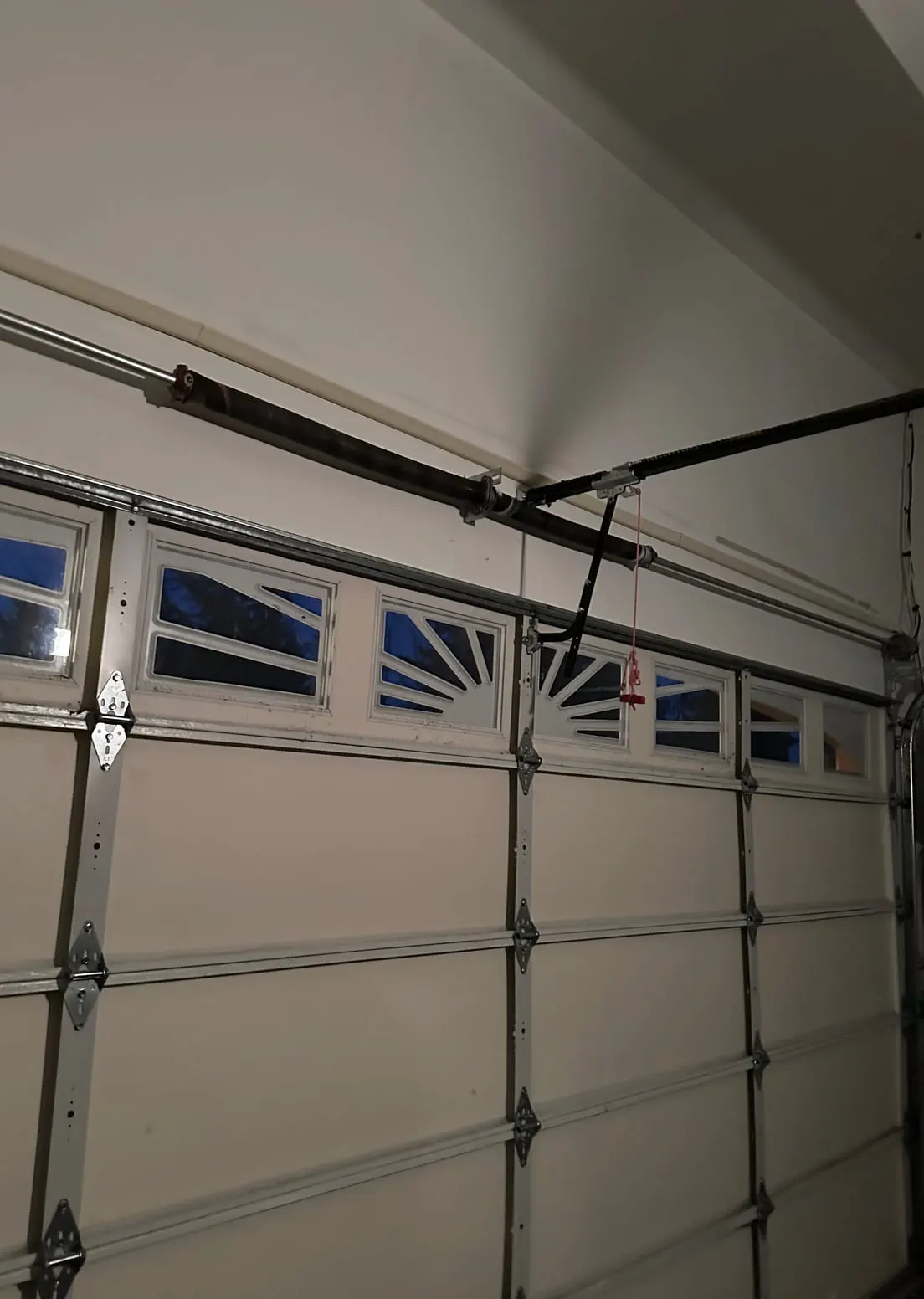
The Opener Groans a Little Louder Every Week
You press the button on your way out and notice it: the motor strains a half-second longer than it used to, there's a slight shudder as the door lifts past the halfway point, or the door drifts down a few inches on its own when you disconnect the opener to move it by hand. None of this is dramatic enough to stop and investigate right away. But it's usually the first sign that your garage door is out of balance, and an unbalanced door is quietly working your opener harder every single time it runs.
What an Unbalanced Door Does to the Opener
A properly balanced garage door is counterweighted by its springs so that the door itself is nearly weightless when it's halfway open. The opener's motor isn't meant to lift the full weight of the door; it's only meant to add a small push to a door that's already balanced by spring tension. When the springs weaken or stretch, the opener starts doing work it was never designed for. That shows up as:
- A motor that runs hotter and louder than normal
- Faster wear on the drive gear, belt, or chain
- A trolley or carriage that strains at the top of the travel
- Premature opener failure, sometimes years before it should quit
In this part of Florida, that strain compounds fast. Humidity and afternoon downpours add moisture weight to wood-composite panels and swell seals, hurricane-season wind-load springs are already working near their rated limits, and salt air drifting in from the coast accelerates spring corrosion. A door that's slightly out of balance in May can be noticeably worse by the time storm season peaks.
Tools You'll Need
- A step stool (if you can't comfortably reach the release cord)
- Work gloves
- A helper is optional but useful for watching the door from outside while you operate it
That's it. This test doesn't require any disassembly, and if at any point the door feels like it's fighting you, stop and treat that as your answer.
How to Test Garage Door Balance, Step by Step
- Close the door fully. Start from a closed position so you have a clean baseline.
- Locate the opener's release cord (the red-handled rope hanging from the trolley track) and pull it to disconnect the door from the opener. This puts the door in manual mode, running on springs alone.
- Lift the door by hand to about waist height, roughly three to four feet off the ground. Go slow and watch how much resistance you feel.
- Let go of the door and watch what it does. A balanced door will stay put, or drift down only an inch or two before settling. It should not slam down and it should not jump upward.
- Repeat the test at a second height, around six feet, just below full open. The door should hold there with the same light resistance.
- Reconnect the opener by pulling the release cord again (or following the trolley back into the carriage until it locks) once you're done testing.
If the door held steady at both heights with only light effort to move it, your balance is in good shape. If it dropped quickly, felt heavy to lift, or shot upward when released, the springs are no longer doing their job correctly.
What a Homeowner Can Safely Do — and What to Leave Alone
Running this balance test, listening for opener strain, and watching the door's behavior are all things any homeowner can do safely with the door in manual mode. What you should not do is adjust spring tension yourself. Garage door springs, especially the torsion springs used on most residential doors, are wound under extreme tension and store enough energy to cause serious injury if they slip while you're working near them. This isn't a WD-40-and-wrench fix.
If the balance test shows a problem, the next step is diagnosis, not DIY adjustment: is it one weak spring on a two-spring system, a cable starting to fray, or a spring that's simply reached the end of its cycle life from years of coastal humidity and salt exposure? That diagnosis, along with the actual repair, is technician work.
When to Call El Jobean Garage Door Experts
If your door failed the balance test, or if your opener has been sounding stressed for a few weeks and you'd rather not wait for it to burn out entirely, that's the point to call us. We'll check spring tension properly with the door isolated and secured, inspect cables and pulleys for the wear that often comes with an unbalanced system, and recommend a Garage Door Spring Repair or, if the opener itself has already taken damage from months of overwork, we'll walk you through Garage Door Opener Installation options sized correctly for your door's weight and size. We serve El Jobean, Port Charlotte, Englewood, North Port, Punta Gorda, Rotonda West, Grove City, and Murdock, and we show up with the right parts the first time, not a guess.
If your garage door is groaning, dropping, or just doesn't feel like itself anymore, don't wait for it to strand you mid-storm-season. Call El Jobean Garage Door Experts today and get it balanced, inspected, and running the way it should.